

Introduction
In the world of manufacturing, prototypes play a critical role in bringing concepts to life. They serve as a tangible representation of designs, allowing engineers and designers to test, iterate, and refine products before moving into full-scale production. Metal prototypes, in particular, are increasingly vital in industries that demand precision, durability, and functionality, such as aerospace, automotive, medical, and consumer electronics. This article explores the importance of metal prototypes, the processes involved in their creation, and their applications across various industries.
What Are Metal Prototypes?
A metal prototype is a physical model or representation of a product made from metal materials, created to test and validate designs, function, and performance before mass production. Metal prototypes are essential in industries where the final product requires high levels of strength, durability, and material-specific characteristics. They are used to assess the feasibility of manufacturing a product, catch design flaws early in the process, and determine how a part or product will perform under real-world conditions.
Metals commonly used in prototyping include aluminum, steel, titanium, and brass. The choice of metal depends on the product’s end-use, desired strength-to-weight ratio, and other specific requirements.
Key Methods of Producing Metal Prototypes
Creating metal prototypes requires advanced manufacturing technologies that offer high precision, adaptability, and efficiency. Several different processes are used to create metal prototypes, each suited for specific project requirements.
1. CNC Machining
CNC (Computer Numerical Control) machining is one of the most popular methods for producing metal prototypes. This subtractive process involves using computerized tools to cut, mill, and shape metal parts from solid blocks of material. The precision and repeatability offered by CNC machining make it ideal for creating prototypes that require complex geometries and tight tolerances.
Benefits of CNC machining for metal prototypes include:
- High precision: CNC machines can produce parts with incredible accuracy.
- Flexibility: Various types of metal can be used, including aluminum, stainless steel, and titanium.
- Scalability: CNC machining can produce both prototypes and low-volume production parts.
This method is often used in industries such as automotive, aerospace, and defense, where precision is critical.
2. 3D Metal Printing (Additive Manufacturing)
3D metal printing, also known as additive manufacturing, is an innovative technique for creating metal prototypes. It builds parts layer by layer from powdered metal that is melted and fused using a laser or electron beam. This process allows manufacturers to create highly complex shapes that would be difficult or impossible to produce using traditional machining methods.
Advantages of 3D metal printing include:
- Design freedom: It enables the creation of complex geometries that traditional methods cannot achieve.
- Reduced waste: Additive manufacturing uses only the material needed, minimizing waste compared to subtractive methods like CNC machining.
- Faster prototyping: Since no molds or tooling are required, prototypes can be produced quickly.
3D metal printing is widely used in industries like aerospace, medical, and automotive, where lightweight structures and intricate designs are often required.
3. Casting
Casting is another method for creating metal prototypes, especially when large parts or parts with complex shapes are needed. In this process, molten metal is poured into a mold and allowed to cool and solidify. Afterward, the mold is removed to reveal the metal part. Casting can be performed using different methods, including sand casting, die casting, and investment casting.
Casting is beneficial for:
- Producing large or complex parts: Parts with intricate designs can be easily created using casting techniques.
- Cost-effectiveness: Once a mold is created, it can be used for high-volume production, making casting a cost-effective choice for larger batches.
However, casting can be less precise than methods like CNC machining, and the initial mold-making process can be expensive.
4. Sheet Metal Fabrication
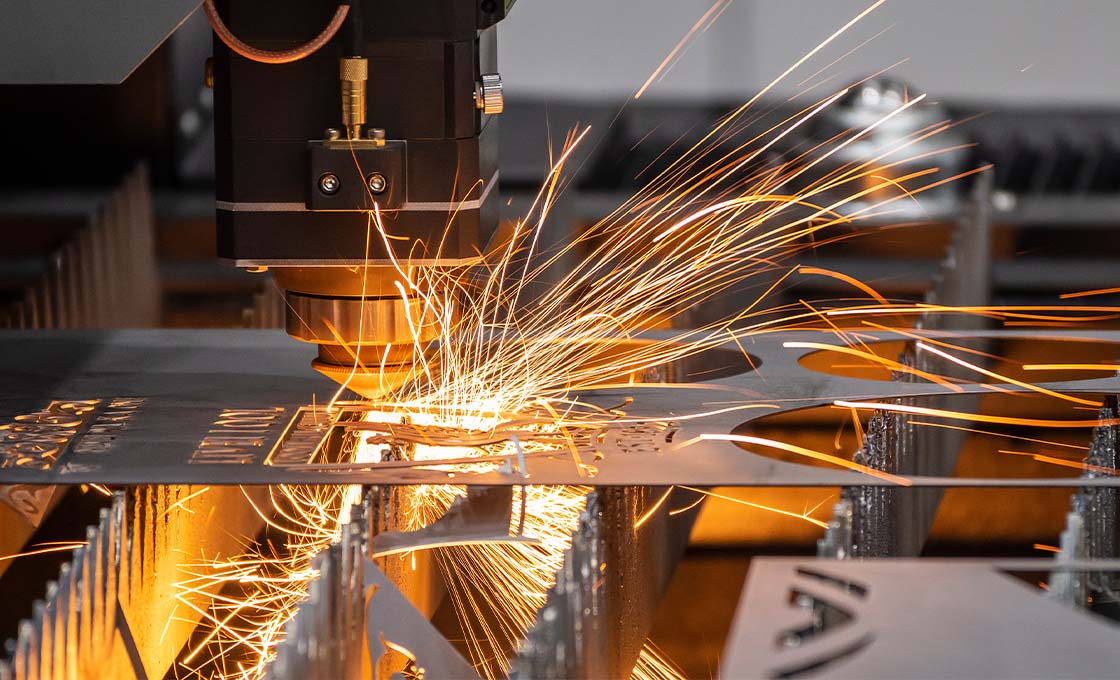
Sheet metal fabrication is another approach for creating metal prototypes, particularly for parts such as enclosures, frames, and panels. This process involves cutting, bending, and assembling metal sheets into the desired shape. Common fabrication techniques include laser cutting, water jet cutting, and press braking.
Advantages of sheet metal fabrication include:
- Speed: The processes involved are relatively fast, making it suitable for rapid prototyping.
- Cost-effective for low volumes: It is often cheaper than other methods, especially when producing small quantities of parts.
- Strength: The metal is often stronger than plastic alternatives, making it ideal for structural parts.
Sheet metal fabrication is commonly used in industries such as electronics, automotive, and construction.
Applications of Metal Prototypes in Various Industries
Metal prototypes have broad applications across numerous industries, where precision and material performance are essential. Some of the key sectors that benefit from metal prototyping include:
1. Aerospace and Aviation
In aerospace, prototyping is essential to ensure that parts meet safety, performance, and regulatory standards. Metal prototypes for this industry are often made from lightweight but strong materials like aluminum, titanium, and high-performance alloys. These prototypes are used to test components such as structural parts, engine components, and fasteners.
The ability to test metal prototypes in real-world conditions (e.g., through stress, vibration, and fatigue testing) is vital to ensure safety and reliability. Aerospace prototypes are often produced using CNC machining and additive manufacturing.
2. Automotive
The automotive industry uses metal prototypes to test various components, including engine parts, body panels, and chassis. These prototypes allow manufacturers to assess how the parts will perform under stress, heat, and wear and tear before full-scale production. Automotive parts often require strong metals such as steel, aluminum, and alloys that can withstand high-performance demands.
CNC machining and casting are commonly used in automotive prototyping to ensure parts meet safety standards and fit within the vehicle’s design parameters.
3. Medical Devices
Metal prototypes are essential in the medical field, where product reliability and biocompatibility are crucial. Medical devices such as surgical instruments, implants, and diagnostic equipment must undergo extensive testing to ensure that they meet the stringent regulations of healthcare authorities like the FDA.
Materials like stainless steel and titanium are commonly used in medical prototypes due to their strength, corrosion resistance, and biocompatibility. These prototypes undergo testing for functionality, ease of use, and patient safety.
4. Consumer Electronics
Consumer electronics, such as smartphones, laptops, and wearables, require metal prototypes for testing form, fit, and function. These prototypes are usually made from lightweight metals such as aluminum, which provide the necessary strength while maintaining a sleek appearance. Metal prototypes in this industry help engineers refine the product design, ensuring that the device is not only functional but also aesthetically appealing and durable.
3D metal printing and CNC machining are widely used in consumer electronics to produce high-quality prototypes that mimic the final product’s performance and appearance.
Advantages of Metal Prototypes
Using metal prototypes offers several key advantages, including:
1. Realistic Representation
Metal prototypes closely mirror the performance and characteristics of the final product, making them ideal for testing real-world functionality. This is especially important in industries where safety, performance, and durability are paramount.
2. Enhanced Testing and Validation
By creating metal prototypes, manufacturers can conduct extensive testing to identify design flaws, material weaknesses, or other issues early in the development process. This allows for improvements before committing to full-scale production, saving time and resources.
3. Increased Design Flexibility
Metal prototypes offer the flexibility to explore different design options and material choices. Whether through CNC machining, casting, or 3D printing, manufacturers can iterate on their designs quickly and efficiently.
4. Cost-Effectiveness for Low-Volume Production
Although producing metal prototypes can be expensive upfront, it often leads to cost savings in the long run. By catching design flaws early, companies can avoid costly mistakes in mass production. Additionally, for low-volume production runs, metal prototyping allows companies to produce functional parts without the need for expensive molds or tooling.
Conclusion
Metal prototypes are indispensable tools in modern manufacturing, providing invaluable insights into the functionality, material properties, and design of a product before mass production begins. Whether in the aerospace, automotive, medical, or consumer electronics industries, metal prototypes help companies test, iterate, and refine their products to ensure they meet the highest standards of quality and performance. By leveraging advanced manufacturing techniques like CNC machining, 3D printing, and casting, businesses can create precise, durable, and cost-effective prototypes that bring their ideas to life.
