

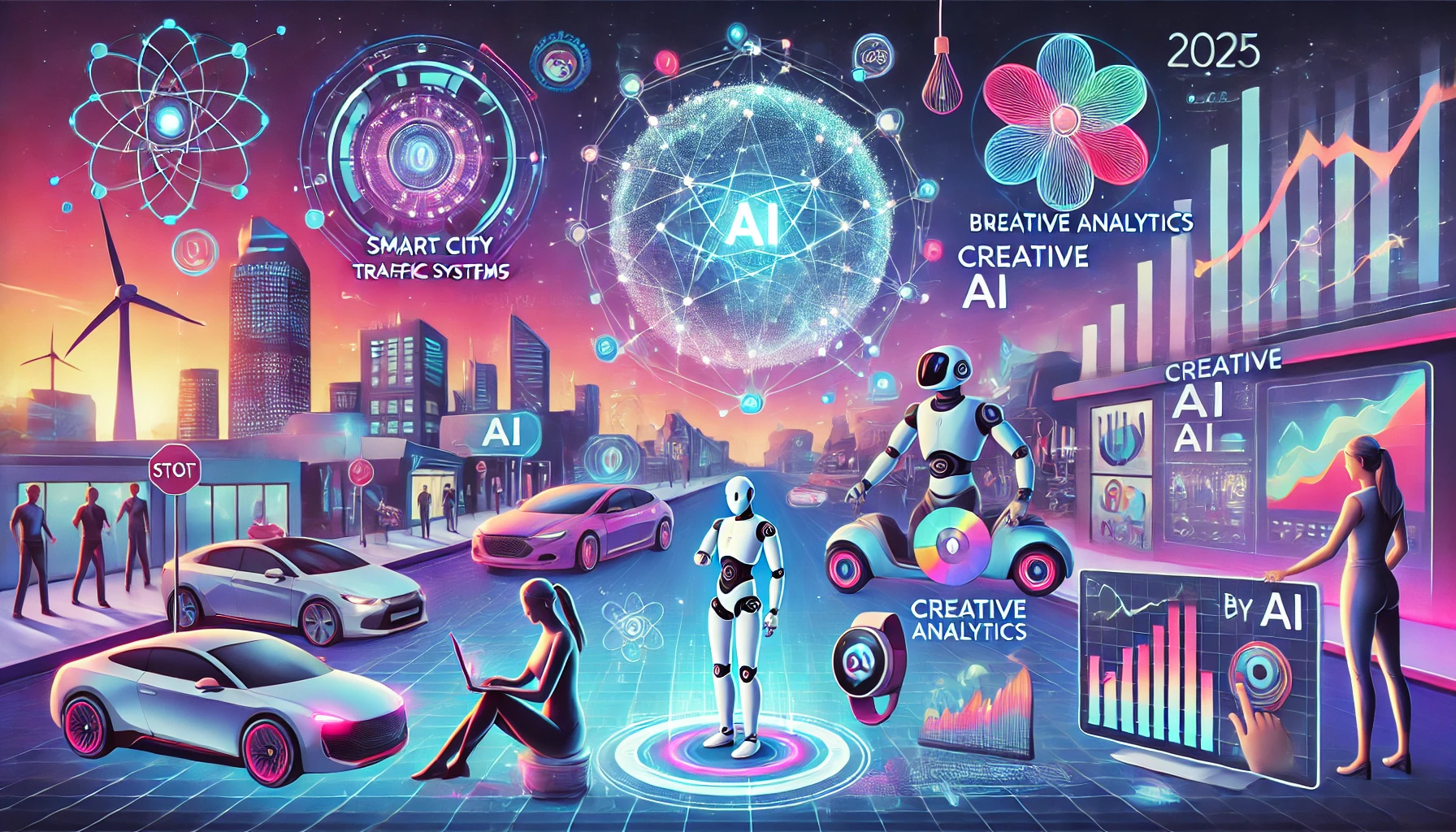
Artificial intelligence (AI) continues to reshape industries and influence daily life. As we approach 2025, some AI trends are emerging as dominant forces that are poised to impact how we work, communicate, and experience the world.
These trends reveal not only how far AI has come but also the directions in which it’s heading.
1. Hyper-Personalization Across Industries
Personalization has always been a goal in technology, but AI is taking it to new heights. By analyzing user data in real time, AI systems are offering highly tailored experiences in various sectors, from retail to healthcare.
For instance, shopping platforms in 2025 might predict what someone wants to buy before they even realize it. AI-powered recommendations are becoming more accurate, considering factors like recent searches, location, and even mood. Similarly, in healthcare, wearable devices might suggest preventive measures or treatments based on continuous monitoring.
However, this level of personalization raises questions about privacy. Many people are concerned about how much of their data is being collected and used to drive these insights. Still, the convenience of such innovations keeps them in demand.
2. The Rise of Autonomous Systems
By 2025, autonomous systems are expected to go beyond self-driving cars and enter new domains, such as logistics, agriculture, and even personal robots. In agriculture, autonomous drones might monitor crop health or apply fertilizers with precision, reducing waste and improving yields.
In comparison to earlier versions, these systems are not only more reliable but also more affordable. Personal robots, for example, might assist with household tasks like cleaning, cooking, or even basic caregiving. These tools are designed to reduce workloads and improve efficiency in everyday life.
While these advancements are exciting, they also prompt debates about dependency on automation. Admittedly, the increased reliance on autonomous systems could make individuals and industries vulnerable to technical failures.
3. AI-Generated Content and Creativity
Creative industries are witnessing a significant transformation thanks to AI. Tools that generate text, art, music, and even videos are becoming more accessible and capable. Artists and writers can collaborate with AI to produce unique works, while businesses use AI to streamline content creation processes.
However, this trend extends beyond traditional forms of media. Tools like AI porn generators are pushing boundaries, creating content tailored to specific preferences. Similarly, NSFW AI chatbots are providing new ways for individuals to engage with AI on a personal level. These innovations highlight the diverse applications of AI in content creation, even as they raise ethical and social concerns.
4. AI-Driven Decision Making
Decision-making processes in 2025 are increasingly being shaped by AI. From business strategies to public policies, AI systems are offering insights based on vast amounts of data. Companies use AI to predict market trends, optimize supply chains, and identify risks, allowing them to make informed decisions.
In particular, governments are also turning to AI to address complex challenges. For example, AI can analyze environmental data to suggest policies for combating climate change or allocate resources more efficiently during crises.
Despite its potential, relying on AI for critical decisions isn’t without risks. Algorithms can carry biases that may lead to unfair outcomes, especially in areas like hiring or criminal justice. Transparency and accountability will remain key concerns as AI takes on more decision-making roles.
5. Expanding Smart Cities
Smart cities are becoming more prevalent as urban areas adopt AI-driven technologies to improve infrastructure and services. Traffic management systems in 2025, for example, use AI to optimize traffic flow, reduce congestion, and lower emissions. Likewise, waste management systems might analyze data to improve recycling rates and minimize landfill use.
These advancements make urban living more efficient and sustainable. However, the implementation of AI in cities also raises concerns about surveillance and privacy. For instance, some worry about how data from public spaces is collected and used. Finding a balance between efficiency and individual rights will be critical for the success of smart cities.
6. The Evolution of Human-AI Interaction
By 2025, interacting with AI will feel more natural than ever. Conversational AI systems are becoming more sophisticated, capable of understanding context, emotions, and intent. This shift is making interactions with virtual assistants, customer service bots, and other AI tools more seamless.
Specifically, advances in natural language processing (NLP) are enabling AI to handle complex conversations with ease. For instance, AI chatbots in customer support can resolve issues without escalating them to human agents. Meanwhile, tools like NSFW AI chatbots are designed for more personal interactions, catering to niche needs and preferences.
Although these technologies improve convenience, they also raise questions about the long-term impact on human relationships. For example, relying on AI for companionship or emotional support could alter how people connect with one another.
Challenges and Ethical Considerations
As these AI trends take shape, they bring both opportunities and challenges. The rapid development of AI technology is exciting, but it also requires careful consideration of ethical and societal implications.
For example, the use of AI in creating hyper-personalized content or autonomous systems can lead to significant privacy concerns. Similarly, tools like AI porn generator and NSFW AI chatbots, while innovative, highlight the need for regulations to prevent misuse. Addressing these challenges will require collaboration between developers, policymakers, and the broader community.
Conclusion
The trends emerging in 2025 show that AI is not just advancing but fundamentally changing how we live and work. From hyper-personalization and autonomous systems to creative tools and smart cities, AI is shaping the future in ways that are both exciting and thought-provoking.
While the possibilities are vast, it’s essential to address the ethical and practical challenges that come with such rapid advancements. By doing so, we can ensure that AI continues to serve as a force for progress, benefiting society while minimizing its potential risks.
