

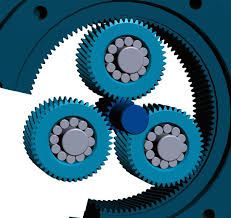
Planetary gears are a fundamental component in many mechanical systems, including automotive transmissions, robotics, and industrial machinery. Their compact design and ability to handle high torque make them indispensable in modern engineering. If you’re looking to understand how planetary gear sets work, then using a planetary gear set simulator is the perfect way to visualize and interact with these complex mechanisms.
What is a Planetary Gear Set?
A planetary gear set, also known as an epicyclic gear train, consists of three main components:
- Sun Gear: The central gear around which the planetary gears revolve.
- Planet Gears: Smaller gears that rotate around the sun gear and are connected to a carrier.
- Ring Gear: The outer gear that encloses the system and meshes with the planetary gears.
This arrangement allows planetary gears to achieve different gear ratios, making them highly efficient for speed reduction, torque multiplication, and directional changes.
Why Use a Planetary Gear Set Simulator?
A planetary gear simulator allows engineers, students, and enthusiasts to experiment with different gear configurations and understand how changes in gear sizes and positions affect performance. Here are some key benefits of using a simulator:
1. Real-Time Visualization
Understanding planetary gear motion can be challenging due to its dynamic nature. A simulator provides an interactive model where users can see how gears interact, rotate, and transfer power.
2. Customizable Parameters
With a simulator, you can adjust various parameters, such as gear size, number of teeth, input speed, and load conditions, to observe different outputs.
3. Instant Feedback on Gear Ratios
By modifying the gear arrangement, you can instantly see how different ratios affect speed and torque, which is crucial for designing efficient transmission systems.
4. Educational Tool for Learning and Teaching
A planetary gear simulator is an excellent tool for students and educators. It helps simplify complex gear interactions, making it easier to grasp fundamental mechanical engineering concepts.
Features of the Best Planetary Gear Set Simulators
When choosing a planetary gear simulator, look for the following features:
- Interactive 3D models: Allows users to rotate and zoom into the gear set for a detailed view.
- Adjustable inputs: Lets users modify the sun, planet, and ring gears to observe performance changes.
- Live calculations: Provides real-time data on speed ratios, torque distribution, and rotational directions.
- User-friendly interface: Ensures easy navigation, making it accessible for both beginners and professionals.
Applications of Planetary Gear Sets
Planetary gear sets are widely used in various industries due to their efficiency and compact design. Some common applications include:
- Automotive Transmissions: Automatic transmissions rely on planetary gear sets to shift gears smoothly.
- Robotics: Used in robotic arms and precision machinery for controlled movement.
- Wind Turbines: Helps in converting wind energy efficiently into mechanical power.
- Aerospace Engineering: Used in jet engines and satellite systems for efficient motion control.
How to Use a Planetary Gear Set Simulator
Using a planetary gear simulator is simple and intuitive. Here’s a step-by-step guide:
- Select the Type of Gear Set: Choose from single-stage or multi-stage planetary gear systems.
- Adjust Gear Parameters: Modify the number of teeth on the sun, planet, and ring gears.
- Set Input Speed: Define the rotational speed and torque of the input gear.
- Observe the Simulation: Watch how the gears interact in real time and analyze the output values.
- Experiment with Different Configurations: Change gear placements and sizes to explore different outcomes.
Conclusion
A planetary gear set simulator is an invaluable tool for understanding and optimizing gear systems. Whether you’re a student, engineer, or hobbyist, exploring planetary gears through simulation can enhance your knowledge and improve design efficiency. Try out the simulator at Me Virtuoso and unlock new insights into mechanical motion today!
