

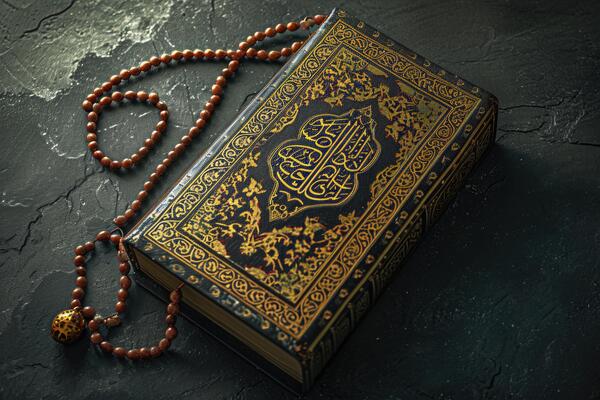
The Quran, the holy scripture of Islam, serves as a guiding light for over a billion Muslims worldwide. Within its verses lie profound teachings about various aspects of life, including the role and status of women. Far from being a collection of historical anecdotes, these teachings offer timeless lessons that resonate with modern society. By exploring the Quranic portrayal of women, we can uncover principles that promote justice, dignity, and equality, enriching our understanding of gender roles in the contemporary world.
1. Women as Equal Beings in Creation
One of the foundational principles in the Quran is the equality of men and women in their creation. Allah states in the Quran:
« O mankind, fear your Lord, who created you from one soul and created from it its mate and dispersed from both of them many men and women. » (Surah An-Nisa, 4:1)
This verse underscores that men and women are created from the same essence, highlighting their inherent equality. The Quran dismisses any notion of superiority based on gender, laying the groundwork for a society that values every individual equally. In a modern context, this teaching aligns with the principles of gender equality advocated by global movements today.
2. Women as Independent Spiritual Beings
The Quran repeatedly emphasizes that both men and women are individually responsible for their actions and have equal opportunities for spiritual growth. In Surah Al-Ahzab, Allah says:
« Indeed, the Muslim men and Muslim women, the believing men and believing women, the obedient men and obedient women, the truthful men and truthful women, the patient men and patient women…for them Allah has prepared forgiveness and a great reward. » (Surah Al-Ahzab, 33:35)
This verse explicitly lists men and women side by side, recognizing their equal capacity for faith, righteousness, and reward. For modern societies, this serves as a reminder to ensure equal opportunities for both genders in education, careers, and religious practices.
3. The Rights of Women: A Revolutionary Concept
During the time of the Quran’s revelation, women in many societies faced severe oppression and had limited rights. The Quran introduced groundbreaking reforms to uplift their status. For example, it granted women the right to own property, inherit, and engage in business—rights that were unheard of in many parts of the world at that time.
In Surah An-Nisa, Allah commands:
« To the men belongs a share of what the parents and close relatives leave, and to the women a share of what the parents and close relatives leave, be it little or much – an obligatory share. » (Surah An-Nisa, 4:7)
This principle of inheritance ensures financial security for women, countering the societal norms of marginalization. Modern discussions about economic empowerment can draw inspiration from these teachings to create systems that address gender disparities in wealth distribution.
4. Women as Educators and Leaders
The Quran highlights the significance of women’s intellectual and leadership roles. A prominent example is the story of Queen Sheba (Bilqis) in Surah An-Naml. Queen Sheba is portrayed as a wise and capable ruler who engages in diplomacy and ultimately submits to Allah after recognizing the truth.
« Indeed, I found a woman ruling them, and she has been given of all things, and she has a great throne. » (Surah An-Naml, 27:23)
This depiction challenges stereotypes and affirms that leadership qualities are not confined to men. In contemporary times, this story encourages societies to value women’s contributions in governance, education, and decision-making roles.
5. Women as Mothers: A Status of Reverence
The Quran places immense emphasis on the role of mothers, elevating their status through numerous references. The Prophet Muhammad (peace be upon him) further reinforced this by stating, « Paradise lies at the feet of mothers » (Sunan An-Nasa’i).
In Surah Luqman, the Quran acknowledges the sacrifices of mothers:
« And We have enjoined upon man [care] for his parents. His mother carried him, [increasing her] in weakness upon weakness, and his weaning is in two years. Be grateful to Me and to your parents; to Me is the [final] destination. » (Surah Luqman, 31:14)
By highlighting the critical role of mothers, the Quran reminds modern society of the need to respect and support women in their maternal responsibilities, advocating for family-friendly policies and maternal health care.
6. The Rights to Consent and Marriage
The Quran emphasizes that women have the right to consent in marriage. In Surah An-Nisa, Allah says:
« O you who have believed, it is not lawful for you to inherit women by compulsion. » (Surah An-Nisa, 4:19)
This verse condemns forced marriages, ensuring that women’s autonomy is respected. Modern discussions about women’s rights can learn from these teachings to combat practices like forced and child marriages, advocating for laws that uphold women’s consent and agency.
7. Women in the Workforce
The Quran does not restrict women from pursuing careers or contributing to society. Khadijah bint Khuwaylid, the Prophet Muhammad’s first wife, was a successful businesswoman, exemplifying how Islam values women’s economic participation.
In Surah An-Nisa, Allah says:
« For men is a share of what they have earned, and for women is a share of what they have earned. » (Surah An-Nisa, 4:32)
This principle encourages modern societies to provide equal opportunities for women in the workforce while respecting their choices and ensuring safe working environments.
8. Combating Stereotypes: Modesty and Empowerment
The Quran’s guidance on modesty often sparks debates, but its principles are rooted in mutual respect and dignity. In Surah An-Nur, Allah advises both men and women:
« Tell the believing men to reduce [some] of their vision and guard their private parts. That is purer for them… And tell the believing women to reduce [some] of their vision and guard their private parts and not expose their adornment. » (Surah An-Nur, 24:30-31)
These verses address both genders, emphasizing that modesty is a shared responsibility. Modern interpretations can focus on fostering respectful interactions and challenging stereotypes that equate modesty with oppression.
9. Addressing Misinterpretations
Despite the Quran’s clear advocacy for women’s rights, cultural practices and misinterpretations often lead to injustices. It is crucial to distinguish between cultural norms and Islamic teachings. For example, practices like honor killings or denial of education to women have no basis in the Quran.
« And do not kill the soul which Allah has forbidden, except by right. » (Surah Al-Isra, 17:33)
By revisiting the Quran’s authentic teachings, modern societies can correct these misconceptions and advocate for justice and equality.
10. A Vision for the Future
The Quranic portrayal of women offers a vision of empowerment, respect, and equality. Its teachings encourage societies to:
- Uphold women’s rights to education, work, and inheritance.
- Recognize the critical roles of women in leadership, family, and community.
- Challenge harmful cultural practices that contradict Islamic principles.
By embracing these lessons, modern societies can foster environments where women thrive alongside men, contributing to collective progress.
Conclusion
The Quran provides a comprehensive framework that elevates the status of women and ensures their rights and dignity. These teachings are not confined to historical contexts but offer universal principles that address contemporary challenges. By aligning societal practices with the Quranic vision, we can create a world where justice and equality prevail, honoring the contributions of women as integral members of humanity.
