

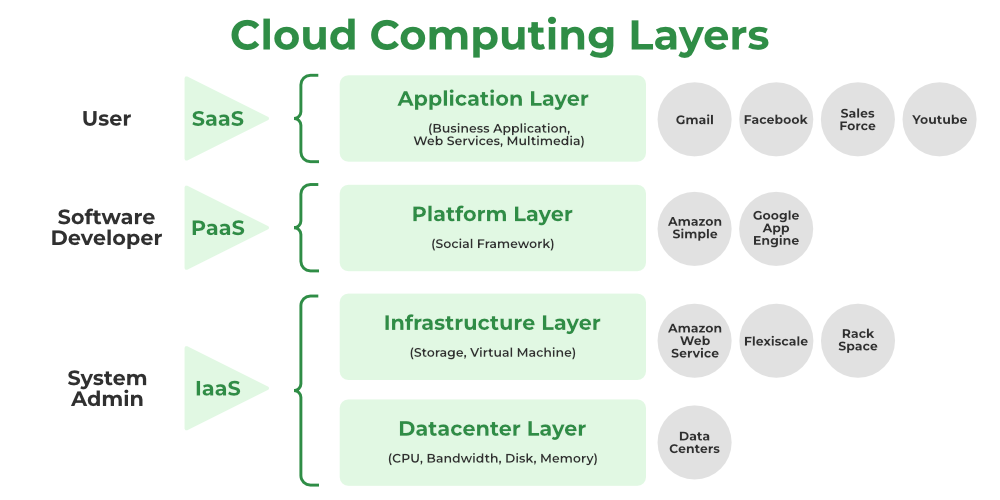
Cloud computing has revolutionized modern IT workflows by enabling businesses to scale rapidly, reduce infrastructure costs, and innovate continuously. For DevOps services companies, understanding the three cloud layers IaaS, PaaS, and SaaS is critical to building robust, efficient, and automated systems. These layers form the foundation for DevOps services and solutions, each offering unique functionalities that align with specific operational needs.
This guide provides a detailed overview of these three cloud layers, their core attributes, use cases, and how they integrate with DevOps services providers to deliver scalable results.
The Three Cloud Layers in DevOps
The three cloud layers—Infrastructure as a Service (IaaS), Platform as a Service (PaaS), and Software as a Service (SaaS)—are hierarchical, offering different levels of abstraction and functionality. Each layer plays a unique role in DevOps services by addressing distinct needs in software development, deployment, and management.
1. Infrastructure as a Service (IaaS)
IaaS is the foundational layer of cloud computing, providing virtualized computing resources over the internet. It replaces physical hardware like servers, storage, and networking equipment with virtual machines, making it ideal for organizations seeking scalable and flexible infrastructure.
Key Features of IaaS:
- Scalability: Dynamically scale resources up or down based on workload.
- Cost Efficiency: Pay-as-you-go pricing reduces upfront infrastructure investments.
- Automation: Integrates seamlessly with automation tools for provisioning and configuration.
- Customization: Full control over operating systems, middleware, and runtime environments.
IaaS Use Cases in DevOps Services:
- CI/CD Pipelines: Use IaaS to host build servers, version control systems, and artifact repositories.
- Test Environments: Spin up isolated environments for QA and performance testing.
- Disaster Recovery: Set up redundant systems and backup services for high availability.
Examples of IaaS Providers:
- Amazon Web Services (AWS EC2): Offers compute instances with flexible configurations.
- Microsoft Azure: Provides VMs, storage, and virtual networks for enterprise-grade infrastructure.
- Google Cloud Platform (GCP): Delivers scalable compute resources with advanced networking options.
2. Platform as a Service (PaaS)
PaaS sits atop IaaS, offering a managed environment for application development and deployment. It abstracts infrastructure management, enabling developers to focus solely on coding and application logic.
Key Features of PaaS:
- Pre-Built Development Tools: Includes APIs, SDKs, and middleware for faster development.
- Simplified Deployment: Eliminates the need for manual infrastructure provisioning.
- Multi-Language Support: Supports multiple programming languages and frameworks.
- Integrated Security: Built-in authentication, encryption, and compliance features.
PaaS Use Cases in DevOps Services:
- Microservices Architecture: Develop, deploy, and manage containerized applications efficiently.
- API Management: Host and secure APIs with minimal infrastructure concerns.
- Serverless Computing: Run event-driven functions without provisioning servers.
Examples of PaaS Providers:
- AWS Elastic Beanstalk: Streamlines application deployment with automatic scaling.
- Heroku: Simplifies application hosting with a developer-friendly interface.
- Google App Engine: Offers a fully managed platform for scalable web and mobile apps.
3. Software as a Service (SaaS)
SaaS represents the highest level of cloud abstraction, delivering fully functional software applications over the internet. Users access these applications via web browsers, eliminating the need for installation, maintenance, or updates.
Key Features of SaaS:
- Ease of Use: Applications are ready to use with minimal configuration.
- Subscription-Based Pricing: Flexible pricing models reduce upfront costs.
- Accessibility: Access software anytime, anywhere with internet connectivity.
- Automatic Updates: Providers handle maintenance, ensuring up-to-date features and security.
SaaS Use Cases in DevOps Services:
- Collaboration Tools: Platforms like Slack or Jira streamline team communication and task tracking.
- Monitoring and Analytics: SaaS tools like Datadog and New Relic provide real-time system insights.
- Code Repositories: GitHub and Bitbucket enable version control and collaborative development.
Examples of SaaS Providers:
- Microsoft 365: Delivers cloud-based productivity applications like Word and Excel.
- Salesforce: Manages customer relationships through a centralized platform.
- Google Workspace: Provides collaborative tools for business productivity.
How the Cloud Layers Work Together in DevOps Services
DevOps services providers leverage all three cloud layers to build and maintain robust CI/CD pipelines and scalable applications. Here’s how they integrate:
- IaaS in DevOps: Provides the infrastructure needed for hosting build servers, test environments, and staging environments. For example, AWS EC2 instances can host Jenkins for continuous integration.
- PaaS in DevOps: Simplifies deployment and scaling for microservices and serverless applications. AWS Elastic Beanstalk, for instance, allows rapid deployment of web apps.
- SaaS in DevOps: Offers out-of-the-box tools for collaboration, monitoring, and code management, enhancing productivity across teams. Examples include Slack for communication and GitHub for code repositories.
Benefits of Using Cloud Layers in DevOps:
- Faster Time-to-Market: Automation and abstraction reduce development cycles.
- Scalability: Resources can be scaled instantly to meet demand fluctuations.
- Cost Efficiency: Pay-as-you-go models minimize upfront investments.
- Enhanced Collaboration: SaaS tools foster seamless team collaboration and transparency.
Choosing the Right Cloud Layer for Your DevOps Needs
The choice of cloud layer depends on your organization’s specific requirements:
| Requirement | Recommended Cloud Layer | Example |
|---|---|---|
| Infrastructure customization | IaaS | AWS EC2, Microsoft Azure |
| Simplified application development | PaaS | Google App Engine, Heroku |
| Ready-to-use software tools | SaaS | Slack, Jira, GitHub |
Conclusion
Understanding the three cloud layers—IaaS, PaaS, and SaaS—is essential for maximizing the potential of DevOps services and solutions. Each layer plays a vital role in modern IT workflows, from scalable infrastructure to efficient application development and seamless team collaboration.
For businesses looking to optimize their software delivery pipelines, partnering with a DevOps services provider that leverages these cloud layers can drive innovation, reduce costs, and enhance operational efficiency.
If you’re seeking to streamline your DevOps workflows, consult a trusted DevOps services company to explore tailored solutions for your business needs.
